
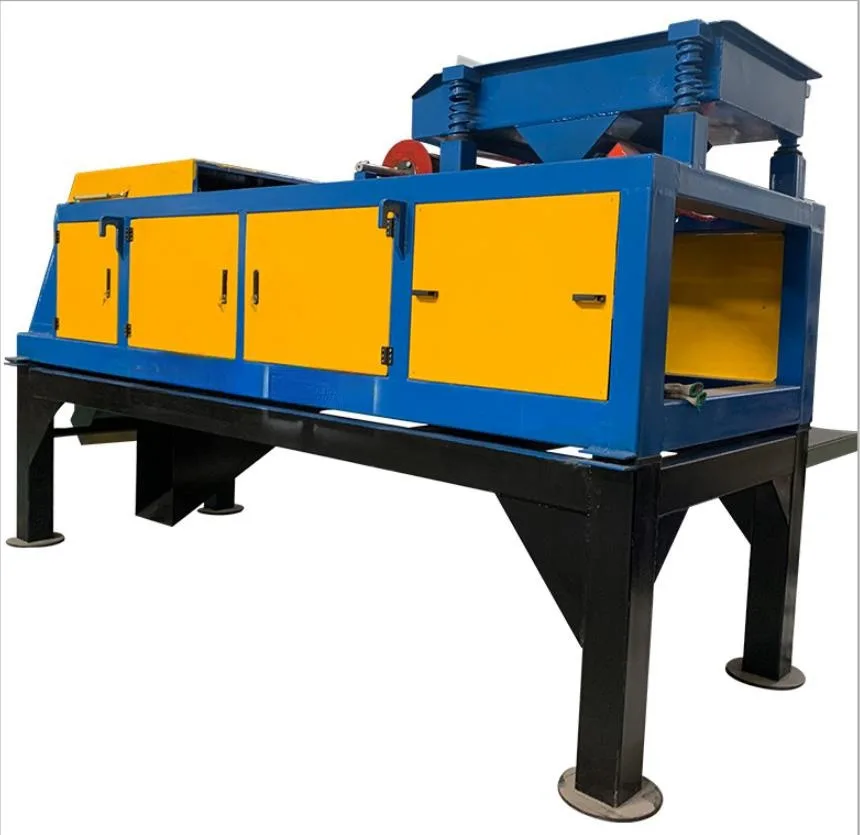
In the earth of recycling and run off direction, and precision are key. One technology that has importantly contributed to up these aspects is the Eddy Current Separator(ECS). This hi-tech piece of equipment plays a vital role in sorting non-ferrous metals from a variety of waste streams. By harnessing the principles of , it enables the recycling industry to be more operational and environmentally property. But how does an Eddy Current Separator work, and what makes it so valuable for enhancing recycling and material separation? Let's break up it down. eddy current separator.
What is an Eddy Current Separator?
An Eddy Current Separator is a type of simple machine used to split non-ferrous metals(like atomic number 13, copper, and memorial tablet) from integrated stuff streams. It works by creating a high-frequency magnetic force arena that induces physical phenomenon currents(called eddy currents) within conductive metals. These currents then generate a secondary attractable sphere that repels the non-ferrous metals away from other materials, allowing them to be easily collected and separated.
How Does an Eddy Current Separator Work?
The working principle behind the Eddy Current Separator can be explained in a few simpleton steps:
-
Magnetic Rotor: The heart of the ECS is a rotating drum or conveyor belt belt weaponed with a right magnetised rotor. The rotor generates a high-frequency cyclic magnetized field.
-
Induction of Eddy Currents: As mixed stuff passes through the magnetised field, conductive materials(such as metals) see a transfer in magnetized flux, which induces current eddy currents within these metals.
-
Repulsion of Non-Ferrous Metals: The eddy currents produced in the non-ferrous metals produce a magnetized area that opposes the rotating magnetic sphere. This results in a repelling force, causation these metals to be ejected from the stuff stream.
-
Separation: As the non-ferrous metals are repelled, they are directed into a separate appeal area, leaving behind non-metallic materials and metallic element metals(which are untouched by the magnetised field).
This very legal separation process is fast and highly competent, qualification ECS an invaluable tool for waste sorting.
Applications of Eddy Current Separators
Eddy Current Separators are wide used in industries where legal separation of materials is material. Some of the most park applications let in:
-
Recycling Centers: ECS is used extensively in municipal waste recycling facilities to retrieve non-ferrous metals from menag run off, electronic waste(e-waste), and interracial plastic streams. By efficiently removing metals like atomic number 13 and , ECS helps advance the quality and value of recycled materials.
-
Scrap Metal Processing: In trash yards and metallic element processing plants, ECS helps in sort different types of metals, facultative operators to apace separate worthy non-ferrous metals from less valuable materials like plastics, wood, and paper.
-
Mining and Mineral Processing: The technology can also be used in mining operations, where non-ferrous minerals and metals need to be distributed from waste rock or ore.
-
C&D Waste Sorting: Construction and (C&D) waste, which contains a mix of metal, wood, and other materials, can be efficiently refined using ECS to split metallic element waste for recycling, promoting a environment.
Benefits of Eddy Current Separators in Recycling
The borrowing of ECS has revolutionized the recycling industry, offer several key advantages:
1. Improved Separation Efficiency
Eddy Current Separators are highly effective at characteristic between non-ferrous metals and other materials, importantly improving separation truth compared to manual of arms sorting or less specialised equipment. This substance more worthful metals are recovered, which boosts recycling .
2. Cost-Effective
Although the initial investment funds in an ECS can be essential, its long-term benefits often overbalance the . By automating the legal separation work on, ECS reduces tug and increases throughput. This leads to higher returns for recyclers, particularly as for non-ferrous metals like Al continues to grow.
3. Environmentally Friendly
By recovering worthful non-ferrous metals that would otherwise be lost in waste streams, ECS contributes to reducing the need for virgin stuff extraction. This reduces state of affairs bear upon, vim using up, and nursery gas emissions associated with mining and production of new metals.
4. Enhanced Material Quality
The pureness of the recovered metals is crucial for the timber of recycled products. ECS ensures high whiteness by in effect separating non-ferrous metals from contaminants. This results in high-quality recycled metals that can be used in manufacturing new products, further promoting sustainability.
5. Flexibility in Material Handling
Eddy Current Separators are extremely pliant and can be used with a wide variety of materials. Whether with small or big volumes of waste, ECS can be organized to handle different types of feed material, making it a versatile root for many industries.
Conclusion
Eddy Current Separators are an requirement technology in modern font recycling and run off direction. By using the principles of magnetism induction, they ply an effective, cost-effective, and environmentally amicable method for separating non-ferrous metals from waste streams. As demand for recycled materials increases and the need for property practices grows, the role of ECS in enhancing recycling and separation accuracy will only become more indispensable.
In addition to rising the quality of recycled metals, ECS supports a circular thriftiness by enabling the retrieval of valuable resources that would otherwise be cast-off. Whether in gathering run off recycling, trash metal processing, or even minelaying, Eddy Current Separators are helping drive design and in the waste management and recycling industries.